


Futurism: Designing Tomorrow’s Realities
- moshe-katz
- Jul 16, 2025
- 3 min read
Updated: Jul 17, 2025
We stand today at the cusp of possibility, gazing into the horizon of what our cities, our buildings, even our very selves might become. Futurism is not a distant echo of science fiction; it is the deliberate, methodical practice of imagining what could be, then shaping this vision into prototyped, tangible scenarios. As architects, designers, and creative strategists, we wield tools like scenario‑building, design fiction, and experimental simulation to sketch the contours of worlds yet unbuilt.
From Speculation to Impact Too often, our work is defined by immediate demands: codes, budgets, timelines. Futurism asks us to pause, to step back, and ask “What if?” What if our façades could learn our moods? What if every public plaza were a living organism that heals loneliness? Through discursive critical design, we challenge assumptions, turning the “what is” into the “what might be.” We draft futures not as fanciful fantasies but as frameworks for strategic thinking.

Scenario‑Building as a Creative Compass Scenario‑building is our north star. By charting multiple plausible futures, ecologically resilient cities, post‑scarcity communities, and hybrid physical‑digital realms, we illuminate the choices that lie before us today. These narrative sketches guide policy, spark investment, and seed interdisciplinary collaboration. When we model a solar‑harvesting canopy draped over a subway station, we’re not only testing new materials; we’re probing the social rituals it might engender, the energy it might democratize.
Design Fiction: Stories That Build Worlds Stories shape belief. Design fiction harnesses the power of narrative, crafting artifacts, an autonomous park bench, a memory‑stitching helmet, a water‑harvesting skybridge, that speak of lived futures. When people encounter these prototypes in exhibitions or augmented‑reality overlays on the streets, their imaginations awaken. They begin to ask: could this be my life in ten years? What would it take to make it real?
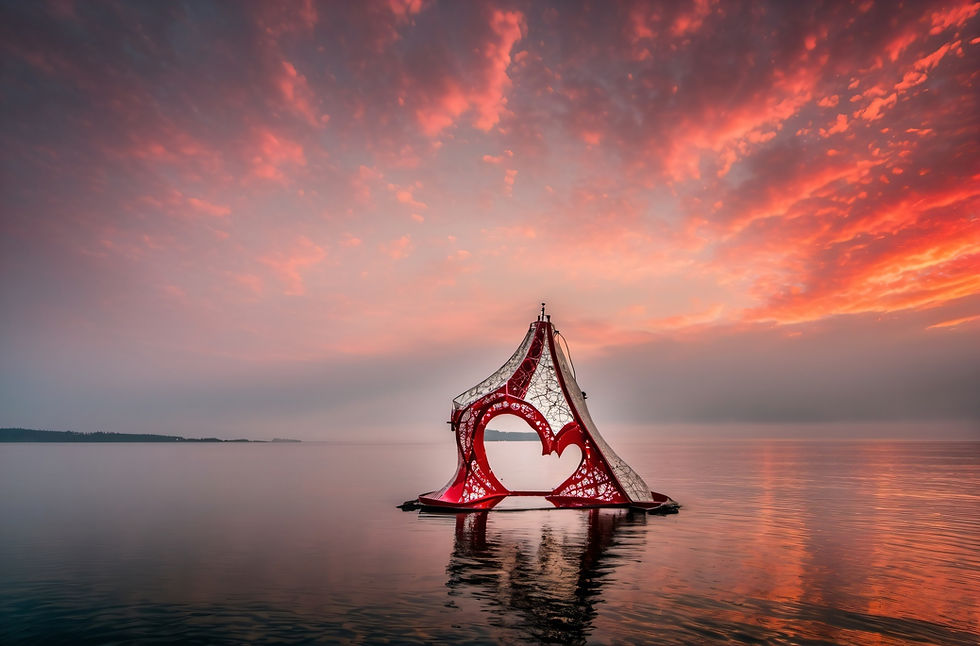
Prototyping and Experimental Simulation A sketch is only the beginning. True futurism demands rapid, iterative prototyping, whether in VR simulations or full‑scale mock‑ups. In one project, we built a “Breathing Pavilion” whose skin expands and contracts in response to air quality data. Visitors immediately sensed what clean air might feel like, its relief, its intimacy. That embodied insight fuels advocacy and policy far more powerfully than any report.

Discursive Critical Design: Questioning the Present Futurism is not utopian cheerleading; it is critical inquiry. By juxtaposing idealized models with cautionary simulations, a sun‑drenched dome alongside a desert‑storm simulator, we surface the trade‑offs inherent in every technological advance. Our role as speculative designers is to hold these tensions in view: to design not only for convenience and novelty but for equity, ecological balance, and human dignity.
Multi‑disciplinary Design: The Future as a Question No single discipline can chart the future alone. Architects must learn from neuroscientists; urbanists from sociologists; technologists from poets. When we frame “the future as a question,” we invite a chorus of perspectives to enrich our visions. Only then can our creative strategies resonate across private and public realms, launching experiments that matter.
Innovation Through Design At the heart of futurism lies a paradox: we design tomorrow’s systems by tinkering on today’s margins. A responsive façade today becomes a self‑healing district tomorrow. A neighborhood workshop in bio‑fabrication grows into a circular‑economy ecosystem. Each breakthrough amplifies the next. As Moshe Katz, I believe our work is not simply to erect buildings, but to prototype the human habitats of the decades ahead.

Imagining the Future Together So here is my invitation: Embrace uncertainty as our greatest ally. Cultivate the discipline of interrogating “why not?” alongside “why.” Layer scenario‑building with hands‑on simulation. Use design fiction to spark conversations that transcend boardrooms and design studios. And never, never, forget that every line you draw, every model you build, is an opportunity to shape the stories we will one day live.
The future is not waiting to be discovered. It is ours to invent, prototype, and heal. Let us begin today.
future design, futurism and innovation, speculative architecture, future cities, visionary planning, emerging technologies and design, futures thinking, urban foresight, moshe katz


Comments