


The House That Becomes You: Spiritual Architecture as Presence

Updated: Aug 29
Spiritual architecture asks a single, powerful question: What can this space awaken in us? When spiritual design answers that question, a room stops being a container and becomes a companion a place that lifts your spirit, stills your mind, and reaches toward something larger than yourself. Imagine stepping into a corridor that stills your breath, a wall that greets your silence, a shaft of light that becomes a daily ritual. Those moments aren’t accidents; they are the work of intention.

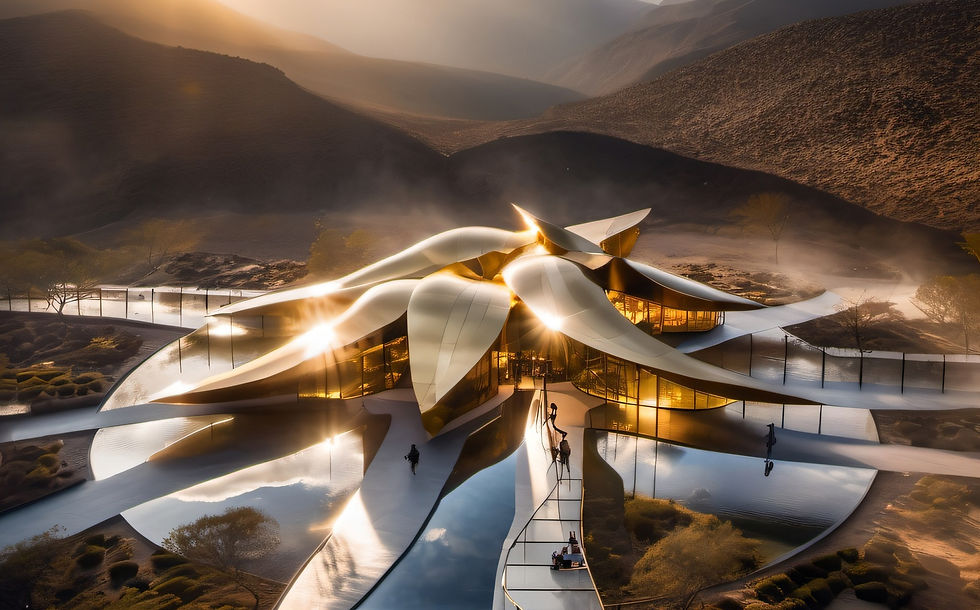
Begin with presence. Map your own emotional landscape onto a site plan, sketch an emotional floor plan, and let intuition guide the first line you draw. In spiritual design, creativity is the heartbeat: it translates sudden knowing into material form, turning an inspired curve of wood or a ribbon of light into a moment that makes someone “look up and catch their breath.” Materials act as messengers rough-hewn wood roots us in memory, reflective water mirrors the cosmos, and warm stone grounds the body while opening the heart.
The home becomes a shrine when roof, column, wall and opening are asked to be more than structure. The roof can be a threshold to the sky; columns can become bridges between earth and heaven; walls a gentle embrace; openings eyes that frame secrets. Practice simple exercises: pick a familiar room, choose an emotion wonder, calm, kinship and list spatial gestures (a narrowing portal, a hidden niche) that might evoke it. Build a paper maquette. Lead a friend through it blindfolded. Notice which gestures land. That practice trains the eye and the heart.
Spiritual architecture is not about creed. It’s about cultivating awe, reflection and belonging. When you treat design as a practice of listening to the wind, the light, the site’s secret song the house you build will not only shelter bodies; it will cradle spirits.


Comments